
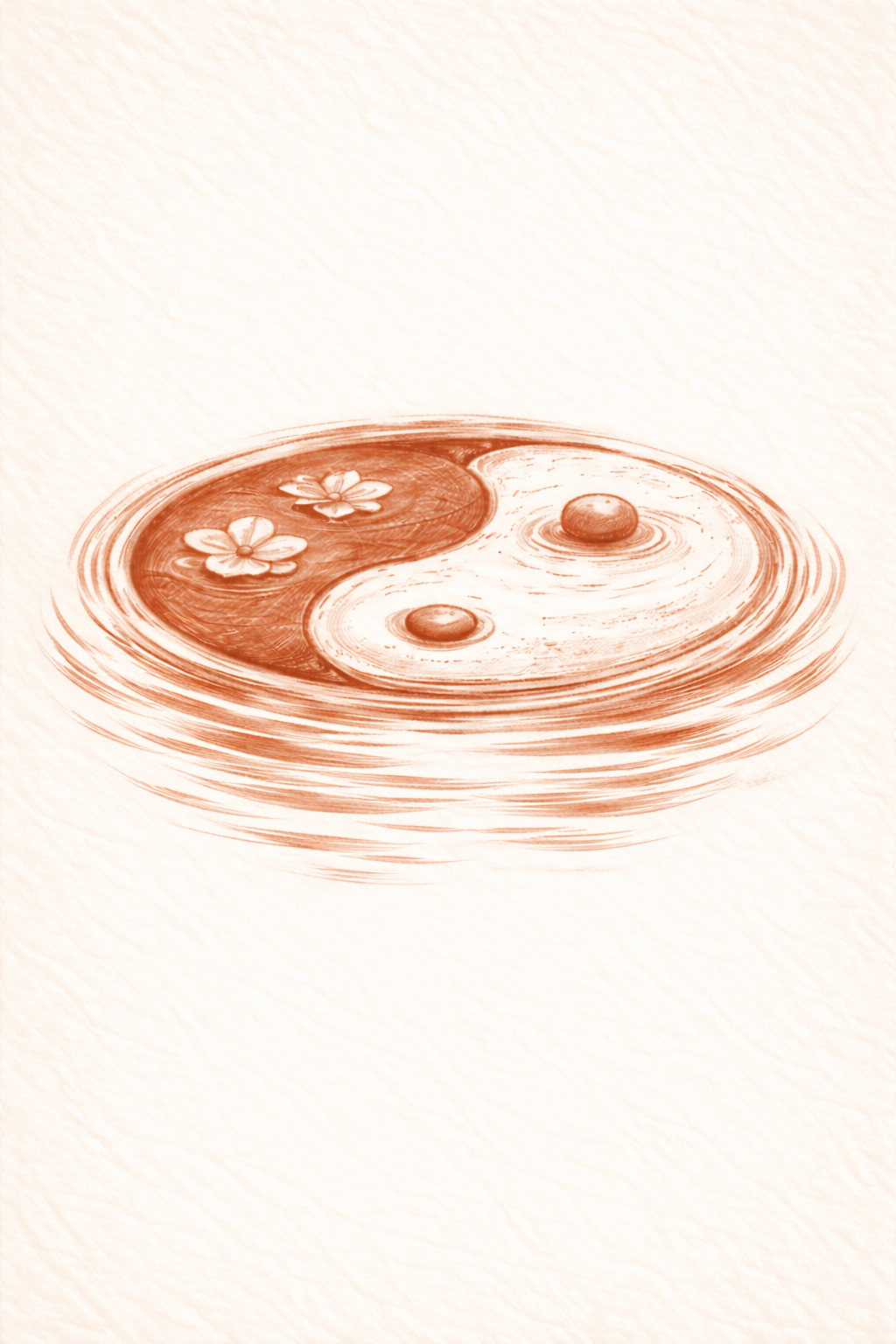
We often say we want balance.
Work–life balance. Financial balance. Balanced schedules. Balanced priorities.
It sounds reasonable. Even healthy.
But balance, as we usually imagine it, can feel narrow and demanding. It assumes life can be carefully divided—that each part deserves the same time, the same energy, the same attention.
Life rarely works that way.
Some seasons ask more of us at work. Others ask more of our health. Some moments call for deep focus. Others ask for rest, care, or presence.
When we chase balance too literally, we can end up feeling like we’re constantly falling short—because something is always receiving more attention than something else.
Harmony is different.
Harmony doesn’t require everything to be equal. It asks that things stay connected.
In music, harmony isn’t created by identical notes played at the same volume. It comes from different notes—each with its own tone—working together.
Life, I’ve learned, is much closer to music than mathematics.
That realization came to me in my early forties. I’ve always thought of myself as a left-brain person—logical, analytical, always looking for explanations and proof. I don’t believe you simply switch from left brain to right brain like flipping a light switch.
What I’ve been learning instead is how to let both sides work together. To bring logic and intuition into conversation. To let them support each other rather than compete.
Harmony allows one part of life to come forward without pushing the others away. It allows intensity without losing connection. Focus without forgetting what else matters. Rest without guilt.
This becomes especially important when we talk about money.
Many people try to balance their financial lives by spreading attention evenly—some saving, some spending, some investing, some enjoying.
But harmony asks a deeper question:
Does the way money flows through your life support the season you’re in?
In a season of building, harmony may look like discipline and patience. In a season of healing, it may look like simplicity and space. In a season of growth, it may look like learning and investment.
None of these seasons are permanent. None of them are wrong.
Harmony adjusts. Balance resists.
Over the years, I’ve worked with highly successful people—doctors, attorneys, professionals who, by most social measures, were “doing everything right.” They had respected careers, financial stability, and outward success.
Yet many of them felt deeply off.
Some experienced tense or distant relationships—with partners or with children. Others faced health challenges that had quietly built up over time. Their lives looked balanced on paper—but didn’t feel peaceful on the inside.
True wealth isn’t about keeping every part of life perfectly even. It’s about making sure no part is consistently pushed aside for too long.
You can’t work endlessly and postpone rest without consequence. Eventually, the part of life that’s been ignored—often health or relationships—asks for full attention. And when that happens, everything else has to pause.
Calling doesn’t disappear when resources demand focus. Belonging doesn’t fade when growth accelerates. Wellbeing doesn’t become optional when ambition rises.
They remain connected. They stay in relationship.
Harmony is what allows life to feel coherent—not perfectly calm or symmetrical, but connected. A life where the pieces make sense together, even when it’s full.
Not calm all the time. Not evenly spread. But meaningful.
And when harmony is present, something subtle happens.
You stop asking whether you’re doing everything equally well. And you start sensing whether your life feels whole.
A Moment to Reflect
In this season of your life, where are you seeking balance—when harmony might be asking for something different?
Until the next moment,
In harmony,
Ohan